
LED Light Therapy Colours Explained: What Each Wavelength Does for Skin
LED Light Therapy Colours Explained: What Each Wavelength Does for Skin
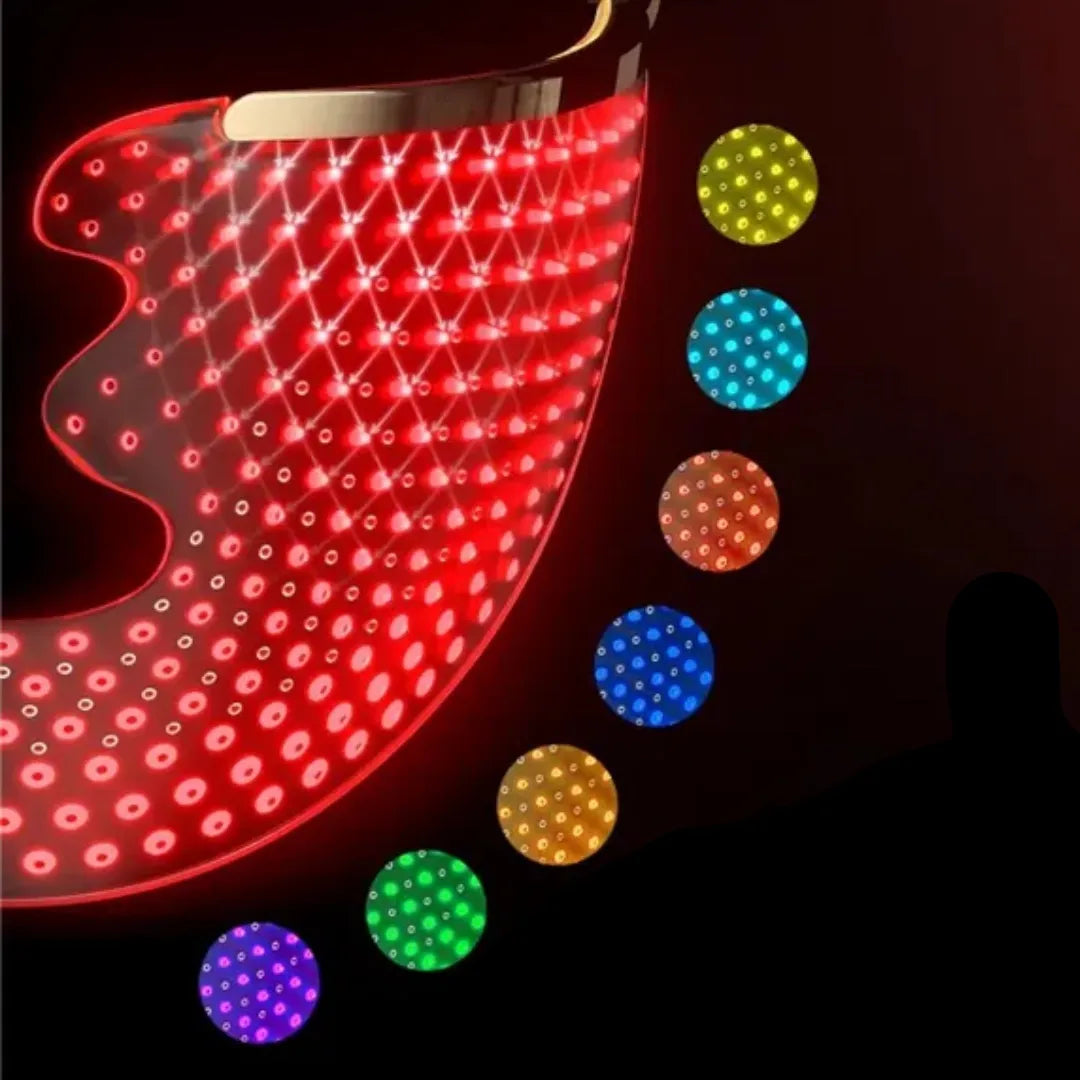
LED light therapy has become one of the most widely used innovations in modern skincare and wellness. What makes it especially interesting is that different colours of light correspond to different wavelengths and each wavelength interacts with the skin in a unique way.
Rather than being a one-size-fits-all treatment, LED therapy is often tailored by colour depending on the skin concern being addressed. From acne support to visible signs of aging, each light spectrum plays a different role in how the skin responds.
This is where beauty technology meets biology.
How LED Light Therapy Works
LED (Light Emitting Diode) therapy uses specific wavelengths of light that penetrate the skin at different depths. These wavelengths are absorbed by cellular structures, where they may influence biological activity such as energy production and inflammation response.
This field is part of a broader area of research known as photobiomodulation, which explores how light can influence cellular function.
Research suggests that different wavelengths may produce different biological responses depending on depth of penetration and energy absorption within the skin. ^1

Red LED Light (630–660 nm)
Red light is one of the most studied wavelengths in LED therapy and is commonly associated with skin rejuvenation. It penetrates into the dermis, where collagen and elastin are produced.
Research suggests red light may support:
- Collagen production
- Skin firmness and elasticity
- Reduction in the appearance of fine lines
- Overall skin rejuvenation
A review in dermatological photobiomodulation highlights its potential role in supporting skin repair and anti-aging processes. ^2
Blue LED Light (around 415 nm)
Blue light works more superficially in the skin and is most often associated with acne-prone skin. It has been studied for its interaction with Cutibacterium acnes (formerly P. acnes), a bacteria linked to acne formation.
Research suggests blue light may:
- Target acne-associated bacteria
- Help reduce breakouts
- Support clearer skin appearance
Clinical studies show it may be useful as a non-antibiotic approach for mild to moderate acne management. ^3

Green LED Light (approx. 520–530 nm)
Green light is often discussed in relation to pigmentation and uneven skin tone. It penetrates at a mid-level depth and is believed to interact with melanocyte activity (the cells responsible for pigment production).
It is commonly associated with:
- Supporting more even-looking skin tone
- Reducing the appearance of pigmentation irregularities
- Brightening dull skin
While research on green light is less extensive than red or blue wavelengths, it remains a growing area of interest in aesthetic dermatology.
Yellow LED Light (approx. 570–590 nm)
Yellow light is often used for calming and soothing the skin. It is typically associated with:
- Reducing the appearance of redness
- Supporting skin comfort and calmness
- Improving overall skin tone appearance
Some studies in phototherapy suggest that longer visible wavelengths may play a role in reducing visible inflammation responses, though more research is needed in this specific range.

Near-Infrared Light (800–900 nm)
Near-infrared (NIR) light is not visible to the human eye, but it penetrates deeper than visible red light.
Because of this depth, it is often studied in relation to:
- Cellular energy production
- Tissue repair processes
- Recovery and inflammation response
- Long-term skin resilience
Research in photobiomodulation suggests near-infrared wavelengths may influence mitochondrial activity, which plays a key role in cellular energy (ATP) production. ^4
Purple, Orange, White, and Cyan LEDs
Some devices combine or extend wavelengths to create additional light categories:
Purple (Red + Blue combination)
Often used to combine acne-targeting and skin rejuvenation effects.
Orange Light
Associated with brightness and glow-focused treatments.
White Light
Broad-spectrum light that may reach deeper layers, often used in advanced device settings.
Cyan Light
Sometimes described in wellness contexts as calming or soothing, though it is less studied in clinical literature compared to red and blue wavelengths.
Why LED Colour Therapy Is Becoming Popular
LED light therapy is part of a broader shift in skincare — from topical-only routines to technology-enhanced wellness approaches.
Consumers are increasingly interested in:
- Non-invasive skin support
- At-home professional-grade devices
- Preventative aging strategies
- Science-backed wellness tools
Rather than treating isolated concerns, LED therapy is often positioned as part of a long-term skin health approach.
Important Note on Results
While LED light therapy is widely studied, outcomes can vary depending on:
- Device quality
- Wavelength accuracy
- Treatment consistency
- Individual skin condition
It should be viewed as a supportive wellness technology rather than a guaranteed or instant solution.
The Future of Light-Based Skincare
As research in photobiomodulation continues, LED therapy is expected to become even more refined, with more targeted wavelengths and personalized protocols.
The future of skincare is increasingly moving toward systems that support skin at a cellular level - not just a surface level.
At Smukke House, this reflects a broader philosophy: beauty is evolving into a combination of science, wellness, and intentional self-care.
References
Avci P. et al. Low-level laser therapy in skin. PubMed: https://pubmed.ncbi.nlm.nih.gov/24049929/
Calderhead RG. LED therapy for aging skin. PubMed: https://pubmed.ncbi.nlm.nih.gov/17566756/
Hamblin MR. Photobiomodulation mechanisms review. PubMed: https://pubmed.ncbi.nlm.nih.gov/26878199/
Blue light acne therapy study. PubMed: https://pubmed.ncbi.nlm.nih.gov/31712293/


Comments